

Now Reading: Jeff Bezos’ 14 Leadership Principles: Apply Amazon’s Strategy to Your Small Business (Actionable Guide)
-
01
Jeff Bezos’ 14 Leadership Principles: Apply Amazon’s Strategy to Your Small Business (Actionable Guide)

Jeff Bezos’ 14 Leadership Principles: Apply Amazon’s Strategy to Your Small Business (Actionable Guide)


Jeff Bezos’ 14 Leadership Principles: Apply Amazon’s Strategy to Your Small Business (Actionable Guide)
Jeff bezos leadership principles: Can a simple garage start a global e-commerce empire? The story of Amazon and its founder shows us innovation and hard work.
Understanding Jeff bezos leadership principles is crucial for success. The Amazon founder started in a small garage. Today, Amazon is known worldwide for online shopping and entrepreneurial spirit.
When implementing jeff bezos leadership principles, We’ll see how a simple idea turned into a global phenomenon. It has changed millions of lives and the retail world.
Jeff – Jeff: Jeff: Key Takeaways
- The humble beginnings of Amazon in a garage.
- The role of innovation in Amazon’s success.
- The impact of Amazon on global e-commerce.
- The entrepreneurial journey of Amazon’s founder.
- The transformation of the retail landscape.
Jeff: Jeff: The Vision Behind a Retail Revolution
Amazon’s story is one of innovation and change, led by Jeff Bezos. As an e-commerce leader, Bezos saw the internet’s power to change retail.
Jeff – Jeff: From Books to Everything: The Initial Concept
Amazon started as an online bookstore. Bezos picked books because there were millions of titles worldwide. This choice let Amazon offer a huge selection and convenience online.
Bezos said, “If you’re going to be successful in this business, you’ve got to be good at understanding customer behavior.”
“The common question is, ‘What’s the next big thing?’ The more appropriate question is, ‘What can we do today that’s going to make the most difference for customers?’”
As Amazon grew, so did its dreams. It expanded beyond books to become “the everything store.” This move aimed to give customers a one-stop shop, using the internet’s power.
Jeff – The Garage Beginnings in 1994
In 1994, Jeff Bezos started Amazon in his garage in Bellevue, Washington. This small start was the beginning of Amazon’s journey to become a tech leader. The garage was where the idea was tested and improved.
Bezos said, “We were shipping out of our garage, and we were determining the product offerings based on what customers were telling us they wanted.”
Amazon’s early success came from focusing on customer happiness and innovation. Its growth was fast, moving beyond its garage. Bezos’ vision set Amazon on a path to become a global leader.
| Year | Event | Significance |
|---|---|---|
| 1994 | Amazon founded in a garage | Humble beginnings of a future tech giant |
| 1995 | First book sold on Amazon | Initial success and validation of the business model |
| 1997 | Amazon goes public | Capital infusion for expansion and growth |
Jeff: Early Life of Jeff Bezos
Jeff Bezos’ story is one of innovation and hard work, starting in his early years. He was born on January 12, 1964, in Albuquerque, New Mexico. His parents were Jacklyn and Ted Jorgensen. From a young age, Bezos showed a curiosity and creativity that shaped his future.
Jeff – Childhood in Albuquerque and Miami
Bezos grew up in Albuquerque before moving to Miami, Florida. Miami was where his love for science and technology grew. His family, especially his grandfather, encouraged his love for learning.
Jeff – Family Influences and Values
Bezos’ family values and work ethic were shaped by his family. His mother, Jacklyn, remarried Mike Bezos when Jeff was four. Mike, who adopted Jeff, taught him the value of hard work and entrepreneurial spirit.
As an entrepreneur, Bezos was driven by innovation and a readiness to take risks. His early achievements, like being the valedictorian of his high school class and studying at Princeton, set him up for success.
Jeff: Educational Journey and Intellectual Formation
Jeff Bezos’ time at Princeton University was key. It was the start of his path to becoming a tech giant. He studied electrical engineering and computer science. These subjects shaped his innovative e-commerce ideas.
Jeff – Princeton University Years
Bezos excelled at Princeton, graduating in 1986. His studies in computer science and engineering were crucial. They helped him change the retail world.
Jeff – Influential Mentors and Ideas
At Princeton, Bezos met many who shaped his entrepreneurial spirit. Key influences included:
- Professors who pushed for new ideas
- Classmates who loved technology as much as he did
- Courses that focused on solving problems and thinking critically
These experiences sharpened his technical skills and taught him to focus on customers. This approach made Amazon a huge success.
Princeton was crucial for Bezos’ future. It helped him become the Amazon founder and a tech industry leader. The knowledge he gained there was the foundation for his success in e-commerce.
Jeff: Wall Street to Web Pioneer
Bezos’ journey from Wall Street to the internet was driven by his entrepreneurial spirit. His time at D.E. Shaw, a hedge fund, shaped his financial understanding and internet vision.
Jeff – D.E. Shaw Experience
At D.E. Shaw, Bezos was a vice president exploring the internet’s business potential. This role gave him a deep look into online trading and the web’s vast possibilities. He analyzed the growing online market, spotting opportunities others missed.

Jeff – The Cross-Country Drive That Changed Everything
In 1994, a cross-country drive changed Bezos’ path. He refined his business plan, using insights from D.E. Shaw. The drive helped him focus on his online retail vision, away from daily life.
This reflection period was key for Amazon’s early strategy. It set the stage for Amazon’s success, marking a shift from Wall Street to web pioneer.
Jeff: Amazon’s Humble Beginnings
In 1994, Jeff Bezos started Amazon in his garage. This was the start of a global e-commerce empire. As the Amazon founder, Bezos wanted to create an online bookstore with more books than any physical store.
Jeff – The First Team and Initial Investment
Bezos wasn’t alone; he had a small team of dedicated people. They shared his passion for innovation. The initial investment was small, with Bezos contributing $10,000 of his own money.
This team worked hard to build the platform that would make Amazon successful.
The first team included:
- Nicole Yankelovich, a talented developer
- Antoine Brison, who handled customer service
- Jeff’s wife, MacKenzie Bezos, who helped with research and admin tasks
Jeff – Early Challenges and Bootstrapping
Amazon faced many challenges in its early days. The company had to bootstrap its operations with limited resources. Building its own systems, including the website and logistics, was a big hurdle.
As an e-commerce mogul, Bezos focused on customer satisfaction and service improvement. Amazon’s ability to adapt and innovate during this time set the stage for its future success as a tech industry leader.
The early days of Amazon were filled with innovation and resilience. These traits would shape the company’s business approach for years to come.
Jeff: Surviving the Dot-Com Bubble
Amazon’s survival during the dot-com bubble showed its innovative business model and smart decisions. As a leading online retailer, Amazon faced many challenges. But it adapted and evolved, staying ahead.
Jeff – Navigating Market Turbulence
The dot-com bubble burst in 2000, causing panic among investors and shoppers. Many e-commerce sites went bankrupt as funding disappeared and trust fell. But Amazon focused on long-term growth and customer happiness.
It kept a strong logistics network and offered more products. This helped Amazon grow even when the market was tough.

Jeff – Strategic Pivots During Crisis
Amazon made key changes to survive the crisis. It worked more efficiently, cut costs, and used new tech to improve customer service. These moves helped Amazon not just survive but thrive.
Jeff Bezos, Amazon’s leader, became one of the richest people in the world. His leadership showed Amazon’s ability to adapt and grow. This was a key moment in Amazon’s journey to become a top e-commerce player.
Jeff: The Jeff Bezos Leadership Philosophy
Jeff Bezos’ leadership has been key to Amazon’s huge success. He focuses on innovation and putting customers first. This approach has not only helped Amazon grow but has also shaped the business world.
Jeff – Customer Obsession as Core Principle
Bezos always puts customer satisfaction first. This makes Amazon stand out and keeps customers loyal. It helps Amazon stay ahead of its rivals.
Jeff – Long-term Thinking vs. Short-term Profits
Bezos believes in thinking long-term, not just making quick profits. This lets Amazon invest in new ideas and areas. It drives lasting growth.
The Famous “Day 1” Mentality
Bezos’ “Day 1” idea is all about keeping a startup’s energy and innovation. Even as Amazon grew big, it kept this mindset. It encourages always trying new things and improving.
| Leadership Principle | Description | Impact on Amazon |
|---|---|---|
| Customer Obsession | Prioritizing customer satisfaction above all else | Loyal customer base and competitive advantage |
| Long-term Thinking | Focusing on sustainable growth over short-term gains | Investment in new technologies and business areas |
| “Day 1” Mentality | Maintaining the energy and innovation of a startup | Culture of continuous improvement and risk-taking |
Jeff: Expanding Beyond Books
Bezos’ drive to innovate led Amazon to grow from a simple online bookstore to a global online retail giant. This change was not by chance. It was the result of careful planning and action.
Jeff – The Everything Store Strategy
In 1997, Amazon started selling CDs, videos, and software, marking the beginning of its expansion. Bezos aimed to make Amazon The Everything Store. He focused on offering more products, improving delivery, and enhancing the customer experience.
- Expanding product categories to include electronics and toys
- Improving supply chain management for faster delivery
- Implementing customer review systems to build trust
By 2000, Amazon’s product range had grown a lot. By 2007, it launched Fulfillment by Amazon (FBA), changing e-commerce logistics.

Jeff – AWS and Cloud Computing Revolution
In 2002, Amazon started working on Amazon Web Services (AWS), a cloud computing platform. It became a tech industry leader. It first offered data storage and computing power to businesses.
- Launch of S3 storage service in 2006
- Introduction of EC2 for scalable computing in 2006
- Expansion of AWS services to include database management and analytics
AWS is now a key part of Amazon’s success. It provides a big part of the company’s income and is vital in the cloud computing world.
Jeff: Building the Amazon Empire
Bezos’ Amazon has changed the retail world. It has grown into many areas through smart buys and new ideas. This growth has made Amazon a big name in e-commerce and tech.
Jeff – Key Acquisitions and Strategic Moves
Amazon’s growth comes from smart buys. Buying Zappos in 2009 for $1.2 billion helped it in shoes. Then, getting Whole Foods Market in 2017 for $13.7 billion helped in groceries. This gave Amazon a place in stores too.
| Year | Acquisition | Amount | Impact |
|---|---|---|---|
| 2009 | Zappos | $1.2 billion | Enhanced footwear offerings |
| 2017 | Whole Foods Market | $13.7 billion | Expanded presence in grocery market |
Jeff – Prime, Kindle, and Echo: Game-Changing Innovations
Amazon’s new ideas have been key to its success. Amazon Prime, started in 2005, offers fast shipping and lots of digital stuff. The Kindle e-reader, from 2007, changed how we read books. The Amazon Echo and Alexa have made homes smarter.
These smart moves and new ideas have grown Amazon’s reach. They’ve also made shopping better for customers. This has made Amazon a top name in tech and retail.
Jeff: Beyond Amazon: The Diversified Portfolio
Jeff Bezos is more than just the founder of Amazon. He is a global leader with a wide range of interests. His approach is all about innovation and taking risks.
Jeff – Blue Origin and the Space Race
Bezos started Blue Origin in 2000 with a big dream. Blue Origin aims to make humans live on other planets. They’re working on technologies for human space travel.
The company has already achieved a major milestone. They successfully launched and landed the New Shepard spacecraft.
- Developed the New Shepard spacecraft for suborbital flights
- Working on the New Glenn orbital launch vehicle
- Collaborating with NASA on various projects
Jeff – The Washington Post Acquisition
In 2013, Bezos bought The Washington Post. This move into media was a big step. Under his leadership, the Post has focused on innovative storytelling and subscription models.
Jeff – Philanthropy and the Bezos Earth Fund
Bezos is also a big giver, especially through the Bezos Earth Fund. Launched with a $10 billion investment, it fights climate change. It supports scientists, activists, and groups working on the environment.
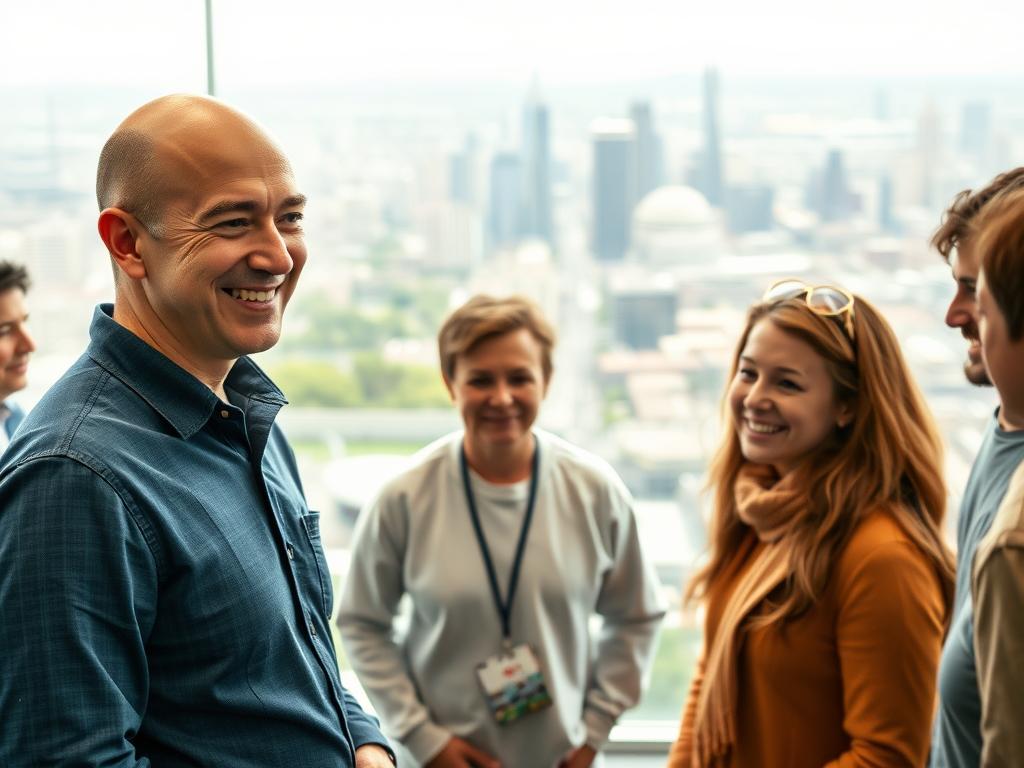
Through these ventures, Jeff Bezos shows his dedication to innovation and making a difference worldwide.
Jeff: 7 Entrepreneurial Lessons from Jeff Bezos
Jeff Bezos, the founder of Amazon, has shared seven key lessons for entrepreneurs. These lessons helped Amazon grow from a small startup to a global e-commerce leader.
Jeff – 1. Embrace Risk and Be Willing to Fail
Bezos is known for taking big risks. He said, “I’ve made billions of dollars of failures at Amazon.” This approach encourages innovation and pushing limits. Learning from failures is crucial.
Jeff – 2. Obsess Over Customers, Not Competitors
Amazon’s success comes from focusing on customers. Bezos believes in understanding and meeting customer needs. He said, “The best customer service is if the customer doesn’t need to call you.” This focus has been key to Amazon’s success.
Jeff – 3. Think Long-Term and Be Patient
Bezos values long-term growth over quick profits. He advises, “If you’re going to be successful, you need to be willing to be patient and make decisions with a long-term view.” This helps entrepreneurs stay focused on their goals.
Jeff – 4. Make High-Quality Decisions Quickly
Bezos also emphasizes making quick, quality decisions. He said, “You have to be willing to make decisions with less information than you’d like.” This balance is essential for entrepreneurs in fast-paced markets.
Jeff – 5. Hire and Develop Exceptional Talent
Building a strong team is crucial for entrepreneurs. Bezos looks for talented and passionate individuals. “We are building a team, not just a group of employees,” he said. Developing talent has been a key strategy for Amazon’s growth.
Jeff – 6. Maintain a Day 1 Mindset
Bezos talks about Amazon’s “Day 1” mindset, which keeps the energy and innovation of a startup. “Day 2 is stasis. Followed by irrelevance. Followed by excruciating, painful decline. Followed by death,” he warned. Staying agile and innovative is vital for success.
Jeff – 7. Invent and Simplify Continuously
Innovation is at the heart of Amazon’s culture. Bezos encourages his team to “invent on behalf of customers” and simplify processes. “We are not satisfied with the status quo; we are always looking for ways to improve,” he said. Continuous innovation keeps entrepreneurs ahead in competitive markets.
In conclusion, Jeff Bezos’ entrepreneurial journey offers valuable lessons. By embracing risk, focusing on customers, thinking long-term, making swift decisions, hiring exceptional talent, maintaining a startup mindset, and continuously innovating, entrepreneurs can overcome challenges and build successful businesses.
Jeff: Conclusion
Jeff Bezos, the founder of Amazon, has changed the retail world. He made shopping and using technology easier for everyone. Starting in a garage, he grew Amazon into a global leader.
Bezos does more than just run Amazon. He also founded Blue Origin, aiming to explore space. He wants humans to live and work in space one day. His work on the Bezos Earth Fund shows his commitment to a sustainable future.
Today, Jeff Bezos is one of the richest people in the world. His success teaches us about innovation and focusing on customers. He shows us the importance of thinking long-term.
Jeff Bezos’ influence will last for many years. He will shape how we live, work, and use technology. His legacy inspires many to follow in his footsteps.